Explore the Latest
Insights in crypto
Explore
the Latest Insights in Crypto




Mercuryo and MetaMask: zero fees for new users in Canada
Every hockey game starts at 0-0. This season, so do your fees. From September 30 through October 31, new MetaMask users in Canada pay zero Mercuryo fees on their first three crypto purchases. Buy right inside the MetaMask app with a card or Apple Pay.
Mercuryo and Tangem: zero-fee USDC and XLM, straight to your wallet
For the next four weeks, Mercuryo and Tangem have both dropped their fees to zero on USDC and XLM, bought on Stellar through your Tangem wallet. Buy XLM at 0% first, then your USDC is 0% too.

Mercuryo Achieves Great Place to Work Certification Across Five Countries
Plenty of companies call themselves a great place to work. Far fewer can point to independent proof. Mercuryo has been certified as a Great Place to Work across five countries: Cyprus, Spain, UK, Croatia, and Serbia.

Mercuryo Named One of Europe's Fastest-Growing Startups
For the third year running, Mercuryo has been ranked in the Sifted 100, this year at #60 in the Southern Europe leaderboard, up from #79 in 2025.

Mercuryo Is Now ISO 27001 Certified
Compliance checks just got easier for our partners. If you've dealt with enterprise compliance, ISO 27001 needs no introduction. Auditors come in, review how you store information, and watch how you handle incidents. They check that your documentation reflects reality, and they won't sign off without documented processes for data confidentiality, data integrity, and data availability.
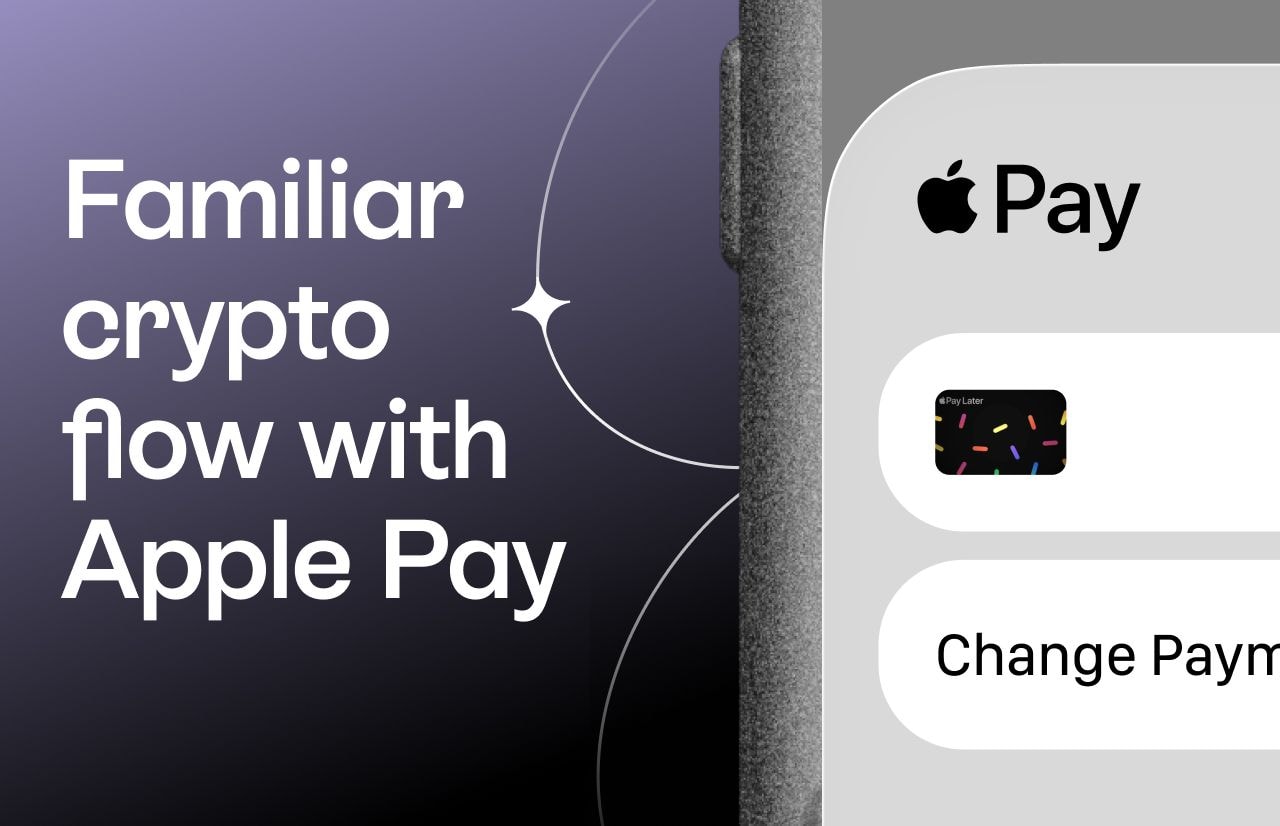
Native Apple Pay: the most intuitive way to buy crypto, now in Mercuryo
No more cards. No redirection when paying for crypto. In Mercuryo, you can simply select Apple Pay, tap “Buy,” and receive crypto without leaving the app. Everything happens in one window—just tap, confirm, done.
Mercuryo and Bybit Launch Zero-Fee USDC Campaign for New Users
Getting started with crypto shouldn’t cost you extra. That’s the thinking behind this new partnership, which eliminates platform fees for new users making their first USDC purchases on Bybit via Mercuryo.
Visa and Mercuryo: cashing out crypto now takes just minutes
Through our partnership with Visa, users can now convert crypto to fiat faster and more easily via Visa Direct, Visa’s near real-time payment network. The experience is built directly into the platforms they already use, and all that’s needed is a Visa card number.
The Case for a Human-Readable Web3
Earlier this year, researchers published a report on pattern responsible for substantial losses among crypto traders. They analyzed thousands of transactions across Ethereum and BSC and found that in 2024 alone, $83.8 million disappeared in 6,633 confirmed address-poisoning incidents. One case in the report stood out because of how ordinary it was. A wallet owner made a routine transfer, pulled an address from recent history, and approved the transaction. Only later did they realize it wasn’t their address but a look-alike planted by an attacker weeks earlier. The network accepted the transaction as valid, and there was no way to reverse it. Crypto still forces users to rely on bulky identifiers that offer no context or identity. Even cautious crypto investors fall back on habits that don’t match the level of risk involved.
Mastercard, Polygon and Mercuryo team up to simplify crypto transactions
We’re the first to offer Mastercard Crypto Credential to self-custody wallet users along with the leading blockchain infrastructure provider Polygon Labs. Now you can use a verified username instead of a long wallet address to send and receive crypto.
Mercuryo, Stellar, and LOBSTR Launch 5% USDC Cashback Campaign
There’s a difference between holding crypto and using it. Most crypto owners keep their assets as long-term investments or inflation hedges, and very few use them for payments. Mercuryo, Stellar, and LOBSTR are teaming up to make stablecoin use beneficial. The new campaign offers 5% USDC cashback (up to $50) when users buy USDC via Mercuryo on the Stellar network through LOBSTR Wallet, encouraging everyday transactions.

Making USDC more accessible: Mercuryo launches fee reduction on-ramp campaign with Coinbase, MetaMask, and Base
USDC is the second-largest stablecoin by market capitalization and one of the most widely adopted in the crypto space—used for payments, trading, and on-chain applications across every major blockchain. Whether you’re a long-time user or just getting started, the experience is now even more user-friendly, faster, and more accessible.
Nova Wallet and Mercuryo Launch First Debit Card for the Polkadot Ecosystem
Nova Wallet is on a mission to change that. In collaboration with Mastercard, Mercuryo, and Quicko, it has launched the first debit card built specifically for the Polkadot ecosystem. The Nova x Mercuryo Mastercard Debit Card lets users spend DOT directly, with automatic conversion to fiat and almost instant acceptance at millions of merchants worldwide....Continue reading «Nova Wallet and Mercuryo Launch First Debit Card for the Polkadot Ecosystem»
How Embedded Wallets Are Powering the Next Wave of Adoption
A few years ago, a crypto wallet was simply a secure storage for digital assets. You’d copy-paste addresses, double-check transactions, and do what you had to do. Fast forward to 2025, and wallets are becoming the front door to everything crypto: DeFi, NFTs, token swaps, gaming.
Cryptopowered Freedom Starts with Spend: Mercuryo Launches Spend Card Compatible with LEDGER™
In a world where traditional banking often restricts financial independence, cryptocurrency emerged as a beacon of hope—offering ownership, security, and freedom. Yet, navigating the crypto ecosystem often sacrifices convenience.
Crypto On-Ramping Trends in H1 2026: The Mercuryo Report
We looked at six months of Mercuryo on-ramp data to see how people bought crypto in H1 2026: what they purchased, how they paid, and from which devices. Below is what changed compared with H2 2025, and what it means for anyone building around payments or Web3.
Adding Crypto Cash-Out to Your Product: Four Decisions Before You Build
Adding crypto cash-out? Consider coverage, verification timing, handling, and fees: cash-out works differently than the buy flow.

When a Crypto Sale Fails: Where the Money Goes and Who Handles It
When a crypto sale fails, the money does not vanish, and the support call is not yours to field alone. See what happens to the user's crypto and who answers it.
How Long Does Selling Crypto Take? The Three Stages Before the Money Lands
A crypto sale lands in stages, and the wait has more than one gate. See what sets the pace between a user selling and the money reaching their card.

What to Track During a Crypto Sale: The Blind Spots Your Team Inherits
Once a user sells, the money moves inside someone else's system. See the three blind spots that it creates, and what each one costs when it is found after launch.

How Do I Add a Fiat-to-Crypto On-Ramp to My App via API?
A shop that doesn't take cards sends customers to the cash machine across the street, and some of them don't come back. An app without an on-ramp does the same thing. The user buys crypto somewhere else, and the wallet they fill there is the one they keep using.
What Are the Use Cases for a Crypto On-Ramp?
People are used to paying with cards and local payment apps. Crypto products need a way to turn that money into coins, which is the job of a crypto on-ramp. Wallets, games, exchanges, fintech platforms, and payroll products can all use on-ramps, each for its own reasons, and those reasons change what the on-ramp needs to do.

How Web3 Businesses Choose a Fiat-to-Crypto Payment Gateway
Someone opens a crypto app and buys their first €50 of bitcoin with a card. Behind that purchase sits a fiat-to-crypto gateway, the service that takes traditional money and delivers the crypto. For a crypto platform, choosing that gateway resembles a shop choosing its card terminal. Setup takes an afternoon, so it is what people compare first. What matters for years is which cards it accepts, who holds the money until it reaches the account and which rules the shop has to follow. This guide starts there.
The Crypto On-Ramp Integration Checklist for Product Teams
The first thing a user judges about your product is how smoothly they can turn money into crypto, and that all runs through the on-ramp. That's strange, because the on-ramp is one of the few integrations where the code is the easy part. Loading a widget is the lowest-effort path a provider offers. Yet these launches slip for a predictable reason. The decisions behind them never made it into the ticket, and no one owns them until the ticket is nearly finished. Quick answer: An on-ramp fails in coordination long before it fails in code. The provider handles payments, compliance, and blockchain delivery, so the hardest engineering moves to the provider and the hard decisions stay with you: what you render in your own screens, who verifies your business, who watches transactions, and how users reach support. This checklist covers those decisions, because they are the ones that surface late.

How to Reduce Friction in Your Crypto Purchase Flow
You already know your funnel leaks. You've seen the drop-off points, and you know which steps cost you buyers. Now you have a list of things you'd like to cut, and one question you can't answer yet: which ones are safe to remove, and which are protecting the user without showing it? Quick answer: Friction and security are two separate things, even though they feel like one. Some steps only cost the user effort, and you cut those freely. A few protect the transaction, and cutting those creates a compliance risk. One question separates them, and this piece runs that question against a live on-ramp. That question is the whole method, so it's worth setting up carefully before you touch a single step. Here's how to run it.
Why Users Abandon Crypto Purchases in Your App
Your on-ramp is live. Users can open the widget, pick an amount, and buy crypto without leaving your app. The integration passed QA months ago. And yet the buy funnel leaks. People start a purchase but never complete it, and the dashboard shows a drop without telling you where it occurred. Quick answer: Users abandon a crypto purchase at predictable points, and the largest share happens before the payment is ever submitted: an unavailable market, a needless login, a payment method that doesn't fit, or an amount over the limit. The card decline is the last leak, not the first, and the early ones are the ones you can design out.

How Long Does It Take to Integrate a Crypto On-Ramp?
A crypto on-ramp lets users buy cryptocurrency with government-issued money, such as euros or dollars, from a website or app. Once a team has picked a provider, committing to a launch date is the hard step, because the work that determines it isn't visible in a button that already looks finished in a demo.

Build Your Own Crypto On-Ramp, or Use a Provider?
Building a crypto on-ramp can look like a bounded engineering project, where you wire up a few payment methods, connect a liquidity source, and ship a "Buy crypto" button. In practice, it turns into a system that keeps moving long after you ship it. That movement is constant. Rates change by the second, payment providers revise their terms, a single purchase runs through a chain of states that can stall or reverse, callbacks fail and get retried, and the currencies and limits a user sees change with their jurisdiction. So the question is rarely whether your team can build it. A capable team can, and that is not where the difficulty lies. The difficulty is time. Independent research puts the ground-up build of a financial product at two to five years.
Crypto On-Ramp Widget or API: Which Should You Choose?
On a product roadmap, adding crypto purchases can look deceptively simple. You place a Buy crypto button inside the wallet, connect an on-ramp provider, and ship it. The button is the easy part. The more consequential decision is what happens after a user presses it. Should the user enter a ready-made flow supplied by the on-ramp provider? Or should the provider's capabilities wire into your own interface, accounts, compliance processes, and transaction systems? That is the practical difference between starting with a crypto on-ramp widget and pursuing a deeper API integration. Both give users access to the same essential service. They ask very different things from your product and engineering teams.

What Is a Fiat-to-Crypto Gateway? How Mercuryo Powers On-Ramp Payments
Any app that wants its users to hold crypto runs into the same problem. Taking money in and handing crypto back is three problems at once: payments, compliance, and blockchain delivery, and each one is hard on its own. A gateway can handle much of this infrastructure on the app’s behalf, reducing what the business needs to build and operate internally.
Crypto Payroll vs Traditional Payroll: Costs, Speed, and Compliance Compared
Paying a global team in 2026 means choosing between two wiring systems: traditional bank rails, or crypto-to-fiat settlement, where salaries go out as stablecoins and land as local currency at the other end. Stablecoin adoption shows clearly in settlement data. On Mercuryo's own rails, stablecoins now account for 57% of all accepted off-ramp transactions in the first half of 2026, up from 25% a year earlier. At that level, adoption has moved past the experiment stage into routine use, and this comparison lays out what the switch looks like in practice.
What Is Crypto Compliance? FATF, FinCEN, and How It Works
Crypto compliance is the system that keeps a digital-asset business licensed and bankable while staying clear of prosecution. The pressure arrived in 2026: illicit crypto addresses received at least $154 billion in 2025, a record, and regulators now expect any firm handling that value to meet the same detection standards banks do. The system works in three layers: FATF sets the global standard, national bodies like FinCEN enforce it by jurisdiction, and software automates the daily work.

How Do Businesses Handle Crypto-to-Fiat Settlement for Payroll, Invoices, and B2B Payments?
Crypto payment processors handle the easy part: accepting assets at checkout. Converting those assets into fiat, recording the transaction, and settling into a bank account is where the real complexity starts, and that's what this piece covers.

What Is Stacks? How Bitcoin Gets Smart Contracts and DeFi
Bitcoin is the longest-running blockchain ever created and the one with the largest security budget. It's also one of the least programmable. Stacks, a smart contract layer anchored directly to Bitcoin, exists to address that second fact without touching the first.
What Are Bitcoin Runes? The Token Protocol Explained
Bitcoin already had one of the highest-security blockchains in the world. What it didn't have was a clean way to issue tokens on it. Bitcoin Runes changed that, and understanding the mechanics matters for anyone watching where token infrastructure is going.
What Are Perpetual Futures? The New US Rules Explained
Crypto derivatives trading hit $85.7 trillion in volume in 2025. Perpetual contracts are a dominant form of that trading, in the words of the US Commodity Futures Trading Commission (CFTC). Most of it happens offshore, outside the US reach. The CFTC's May 2026 approval of regulated Bitcoin perpetuals, or perps, changes that.

How Can Users in Africa Buy Crypto with Bank Transfer or Card?
Crypto adoption across Sub-Saharan Africa has grown consistently over the past several years, driven by currency pressure, high remittance costs, and limited access to traditional banking. Nigeria and Ghana are at the centre of that shift. Whether you're in Lagos or Accra, buying crypto with a bank transfer or card is more straightforward than most people expect. The payment method, the platform, and its licensing status all affect whether the transaction goes through.
What Is KYC in Crypto? Why Exchanges Ask for Your Identity
KYC checks at crypto exchanges trace back to a single IRS form many users have never heard of. Form 1099-DA went out in early 2026. It gives exchanges one more reason to tie crypto sales to a verified identity.

What Are Bitcoin Ordinals? How NFTs Work on the Bitcoin Blockchain
Bitcoin crossed 100 million inscriptions in November 2025. Ordinals gave the oldest blockchain something it had never had before: a native way to own a digital artifact, stored entirely on-chain, without leaving Bitcoin.

What Is the GENIUS Act? The US Stablecoin Law Explained for Businesses
For a decade, anyone could issue a dollar-pegged token in the US with no federal rules on reserves, licensing, or how tokens were backed. On July 18, 2025, that changed. President Trump signed the GENIUS Act into law on July 18, 2025 after it cleared the House with 308 votes and the Senate 68-30, making it the first federal framework for stablecoins in US history.
6 Best Bitcoin Payment Processors for Businesses
The six Bitcoin payment processors on this list charge different fees and move money at different speeds. That gap shows up directly in the margin. Choosing well matters more than most finance teams expect.
IRS Crypto Reporting. A Step-by-Step Compliance Guide
For custodial exchanges with tens of thousands of active accounts, the cost of getting IRS crypto reporting wrong compounds fast. Penalties for intentional disregard start at $680 per return with no cap. As of April 2026, the IRS has moved from transitional relief to active enforcement. Gaps in systems or documentation no longer have a safety net.
Form 1099-DA: What Brokers Must Report to the IRS in 2026
The Joint Committee on Taxation estimates that mandatory digital asset broker reporting will raise $28 billion in federal tax revenue over 10 years. Form 1099-DA, Digital Asset Proceeds From Broker Transactions, is how the IRS collects it. Finalized under Treasury Decision 9989, the form applies to custodial exchanges, hosted wallet providers, and payment processors operating in the U.S. market. The obligations are specific. Deadlines are live. And the relief most operators are counting on is narrower than they think.

How to Buy Crypto in the US with Bank Transfer or Card
Buying crypto in the US has never been more accessible, but the options aren't always obvious. What are the legal ways to buy crypto in the US? Each payment method carries different fees and settlement times, and the platform you pick has to meet federal requirements before you can fund anything.
Best B2B Fiat-to-Crypto Payment Gateway for Developers
What is the best B2B fiat-to-crypto payment gateway for developers? Picking the wrong one kills conversions, breaks compliance, and sends engineering teams back to square one mid-launch. This guide breaks down the leading options in 2026, covering how they work, what to look for, and which ones are worth integrating.

Blockchain Technology From Concept to Real-World Application
Few technologies travel as far from their original purpose as blockchain did. It showed up inside Bitcoin in 2008 and spent the next decade being misread as a crypto story. Supply chains figured out what it could do. Then real estate. Then healthcare. The global market sits at $72 billion in 2026. That number doesn't come from speculation. It comes from companies that already deployed it and found it cheaper than what they were doing before.

How Polkadot Works and Why It Stands Apart from Other Blockchains
Blockchains are islands. Each runs its own validators and security budget, and moving value between them usually means going through a bridge that can be exploited, or a wrapper that cuts into margins. Polkadot's answer was to make interoperability in the base layer. Today, it runs 65 active parachains, each a specialized chain with its own logic, all sharing one validator set and passing data between each other without external infrastructure.
How to Buy Your First Stablecoin: Step-by-Step Buying Tutorial
Digital money is moving, and you want in. That's exactly why Mercuryo and CoinEx are joining forces to put your first stablecoin within reach. The payment layer runs behind 250+ platforms worldwide, including some of the most widely used self-custodial wallets in crypto, so buying happens inside the app you're already in. CoinEx operates on the same principle. With 1,000+ assets available across 200+ countries and regions, it opens crypto markets to anyone, no trading background required. This guide brings both together. By the end, you'll have a new account and your first stablecoin, bought with your local currency, in a few taps.
How Cryptocurrency Exchanges Work in 2026
Few people buy crypto knowing what happens behind the screen. A price appears, they tap confirm, and funds move. The mechanics behind that moment involve order books (live lists of buy and sell offers), liquidity pools, custody systems, and settlement layers. That infrastructure varies widely depending on which type of platform you're using. Combined, the exchanges running on top of it processed over $79 trillion in trading volume in 2025. Understanding what sits underneath that number is what this article is for.
ENS Domains: How Ethereum Name Service Simplifies Crypto for Users
PayPal and the National Cryptocurrency Association surveyed U.S. merchants in January 2026. About 4 in 10 now accept crypto at checkout. But treasury wallets and partner payments still depend on raw Ethereum addresses. One wrong character in a 42-character hex string, and the funds are gone. ENS domains fix that. They replace hex strings with readable names like company.eth. This way, you can clearly see who you're paying before you hit send.
US Bitcoin Reserve at Year One: What Institutions Need to Know
When President Trump signed Executive Order 14233 in March 2025, the US Bitcoin Reserve became official policy. Behind it were roughly 328,372 BTC that the federal government had accumulated through criminal and civil forfeitures over the previous decade, with no congressional vote and no taxpayer purchase behind it. A year later, that stockpile still sits on the federal books, and the conversation among CFOs and treasury teams has moved past the basic questions about what this reserve is. What they want to know now is what it actually does, whether it has enough legal backing to last, and what it means for institutional bitcoin exposure.
PARITY Act Crypto 2026: Stablecoin Tax Reform in the US
The PARITY Act crypto tax proposal arrives as US stablecoin taxation gets more complex. USDC and USDT are still classified as digital assets rather than currency, and Form 1099-DA cost basis reporting rules went live for covered transactions after January 1, 2026. The discussion draft moves through the House with a proposed effective date of January 1, 2027. For finance and compliance teams, that reporting layer turns simple vendor payments or payroll runs into a reconciliation burden that wires never carry.
Bitcoin Wallet Address and How It Works for Payments
Bitcoin wallet addresses matter for business payments. Nearly 9 out of 10 merchants receive customer inquiries about crypto. About 40% accept it at checkout. Those that do report crypto represent over a quarter of sales. Most finance teams don't know that the address type you choose costs real money. It can add or subtract thousands per month in fees. Here's what you need to know.

Bitcoin Whales: Market Impact Explained
Someone sat on 2,100 Bitcoin for thirteen years. Last month, they finally sold around $147 million at current prices. That's the kind of move that shows up on every whale tracker, floods crypto Twitter, and shakes order books before most traders even notice. If your company holds BTC or accepts it as payment, these old wallets matter more than you think.

Cold Wallets: How Crypto Businesses Secure Digital Assets in 2026
Cold wallets secured roughly 22% of all crypto holdings in 2025. That share is climbing fast: institutional cold storage usage surged 51% year-over-year, and the hardware wallet market is projected to grow at a 29% CAGR through 2031. For businesses handling customer funds, self-custody is no longer optional. Platforms that keep assets on exchanges face regulatory scrutiny, client trust issues, and counterparty risk. The same exposure left FTX customers unable to withdraw $8 billion in 2022. This quick guide covers how cold storage works, which hardware fits your operation, and how to buy and spend crypto directly from self-custody.
Smart Wallets: How Account Abstraction Is Changing Crypto UX
Between 2.3 and 3.7 million Bitcoin sit locked in wallets because owners forgot their seed phrases, and no reset button exists. At current prices, that amounts to $200 billion frozen forever. The same friction that shuts out current holders also repels newcomers. Traditional onboarding flows lose 65-90% of people before setup completes. Smart wallets eliminate both problems. Passkey login replaces 24-word recovery phrases, apps cover transaction fees, and signup takes one tap. If you're building crypto products for fintechs or B2B platforms, this is how you retain them.
Securitize and Real-World Asset Tokenization: How It Works
Tokenized real-world assets on public blockchains crossed $27.4 billion in March 2026, up from $6.7 billion a year earlier. We flagged this trajectory in our RWA outlook last year, and the growth has exceeded even bullish projections. Securitize powers a significant share of that market, including BlackRock's BUIDL fund, the largest tokenized money market product in the world. But tokenization is only half the equation. Getting traditional investors in and out is what makes it work. We break down how Securitize operates and where fiat rails fit.
Crypto ETFs Explained: What Every US Investor Should Know in 2026
Two years ago, US investors held zero dollars in crypto ETFs. Today that number is $109 billion, according to CoinMarketCap. These exchange-traded funds let investors buy exposure to Bitcoin, Ethereum, Solana, XRP, and other digital assets through regular brokerage accounts, without managing digital wallets or security codes. This guide explains how crypto ETFs work, which funds lead the market, and how they compare to owning crypto directly.
Wallet-as-a-Service (WaaS): A Practical Guide for Fintechs
In 2026, adding crypto to your product is no longer an engineering challenge but a strategic business decision. WaaS (Wallet-as-a-Service) handles the cryptographic complexity so your team can focus on what matters: building your product and keeping users engaged.

The CLARITY Act Explained: What US Crypto Businesses Need to Know in 2026
The CLARITY Act is the first major US law that defines which crypto assets are commodities (under CFTC oversight) and which are securities (under SEC oversight). This distinction is critical because it determines your regulator, compliance requirements, and operational freedom in the US market. The House passed H.R. 3633 in July 2025. The Senate votes next.
Crypto Wallets Explained: Types, Security & How to Choose in 2026
After years of helping users set up crypto wallets, we’ve learned the best one isn’t the most secure or most convenient. It’s the one matching your actual behavior. Someone trading daily needs something completely different than someone holding long-term.
Understanding Stablecoins: How Businesses Use USDT and USDC
Your finance team sent a $50,000 payment to a supplier in Vietnam on Monday. It’s Thursday, the money still hasn’t arrived, and no one can tell you which intermediary bank is holding it up. That kind of problem is why companies are moving to stablecoins. USDT and USDC now account for over 80% of a market that passed $305 billion in 2025, roughly the size of Finland’s entire gross domestic product, and businesses are using them to settle cross-border payments in minutes instead of days. Two regulatory frameworks gave them the confidence to make that switch: the U.S. GENIUS Act and the EU’s MiCA, both requiring issuers to hold equal reserves and operate under licensed oversight. For companies evaluating stablecoins as payment infrastructure, the rules are finally in place.
Buy Crypto with a US Bank Account: ACH Transfer Explained
If your platform only offers card payments, you are leaving money on the table. Credit cards carry 2 to 3% processing fees, frequent declines on crypto purchases, and chargeback risk that eats into margins. Bank transfers eliminate all three. After the GENIUS Act cleared the regulatory fog in 2025, US banks began competing for crypto business, and the ability to buy crypto with bank account has overtaken cards as America’s preferred funding method. ACH offers zero-fee deposits for recurring purchases, while wire transfers give same-day settlement for high-value transactions. What follows is the infrastructure breakdown: how ACH and wire work, when to offer each, and how to extend the same experience to users outside the US.
Cross-Border Crypto Payments for US Businesses: Why They Beat Wire Transfers
For a US small or medium-sized business, paying a supplier in Mexico or a developer in Poland still feels like 1998. Manual forms, chains of correspondent banks, funds stuck in processing for days while the container sits at port and the partner pushes back. Drag Drag Stablecoin transfers now hit multiple trillions of dollars annually. As of February 2026, total market cap stands at $307 billion according to DefiLlama, rivaling major global settlement networks. But the real story behind cross-border crypto payments isn’t speculation. Drag Drag For CFOs and treasurers, it’s a practical replacement for legacy wires, moving from wire pending to near-instant settlement without losing compliance or control.

Top 7 Crypto trends that will shape the 2026 landscape
In 2026, crypto is stepping into a more practical, real-world stage, with AI managing portfolios and tokenization opening up new investment opportunities. We’ve scoured the latest crypto news, and we’re sharing our expertise to explore the trends shaping how digital assets will be used, traded, and integrated this year.
Mercuryo 2025 Recap: Key Events That Defined Crypto’s Legal Architecture
For years, the crypto industry operated in limbo. Governments couldn`t agree on what digital assets actually were. Securities? Commodities? A threat to the system? Nobody knew. So, the industry got conflicting rules, frozen bank accounts, and lawsuits instead of guidelines. Builders left for jurisdictions that actually wanted them.

Only 12% of Americans use Web3 wallets. What stops the other 88% and how to win them?
A survey of 3,428 U.S. adults reveals five adoption factors and a practical roadmap for teams building wallets, apps, and growth loops.

Cross-border payments: What they are and how they’re evolving
Cross border payments are the invisible plumbing of the global economy, and right now, it’s leaking time, money, and trust. This guide explains how new infrastructure like crypto rails, AI-driven compliance, and on/off-ramp providers are rebuilding the system, so money can move faster, cheaper, and more inclusively across borders.
Why 2025 is the Year of RWAs Tokenization
In 2025, Real World Assets (RWAs) have moved from idea to reality. More than $50 billion worth of real estate, debt, equity, and funds is tokenized. Projects like Franklin Templeton’s on-chain money fund and BlackRock’s digital liquidity fund show how far the market has come.

Between Jurisdictions: Top 5 Countries to Launch Your Crypto Startup
As cryptocurrency adoption continues to rise, new jurisdictions keep popping up, with presidents themselves announcing their support for digital currencies. It all sounds exciting until you realize that political hype doesn’t always translate into long-term stability.

Stop Confusing Non-Web3 People: The Dos and Don’ts for Crypto Wallets
Have you ever tried explaining crypto to your relatives? You start talking about wallets, and suddenly, you’re hit with many questions. «What’s a private key? Do I need a password for this? How do I send tokens?»

The Rise of AI Agents in Crypto and How They Reshape Onchain Economies
The convergence of artificial intelligence (AI) and blockchain technology is reshaping on-chain economies, introducing new efficiencies and capabilities.
Read our Guides,
How to Buy:






Enhancing PancakeSwap’s DeFi Journey with Mercuryo’s Signature On-Ramps
PancakeSwap is a decentralised exchange initially powered by the BNB Chain that prioritises BEP20 tokens.
Empowering ecosystems: Mercuryo and Tonkeeper’s collaboration
TON, short for The Open Network, is based on the idea of a decentralised and open internet.
Secure Connection: Mercuryo, Trezor, and Invity Union
The pioneer of the hardware wallet industry, Trezor has been on the market since the summer of 2014.