How Mercuryo Is Making Crypto Purchases Feel Familiar with Apple Pay
Buying crypto shouldn’t feel different from any other financial transaction you make. Yet for most people, it does.
Here’s a story that plays out thousands of times a day: someone downloads a crypto wallet for the first time. The app itself looks great, the interface makes sense. Everything seems straightforward until they actually try to buy crypto.
Suddenly, they’re redirected to an unfamiliar website. The flow asks for information they weren’t expecting, and the payment page looks nothing like what they just left. Multiple screens later, they’re not entirely sure if the transaction worked, and they definitely don’t know when their crypto will show up.
The problem here isn’t that people don’t understand crypto but rather that buying crypto breaks every expectation set by modern financial apps. When you call an Uber, you pay inside the Uber app. When you order food, you pay inside the food app. When you buy something online, you expect to check out right there, not get bounced to some third-party page.
Crypto platforms should work the same way. And now, with Mercuryo’s Apple Pay integration, they finally do.

What This Feature Actually Means
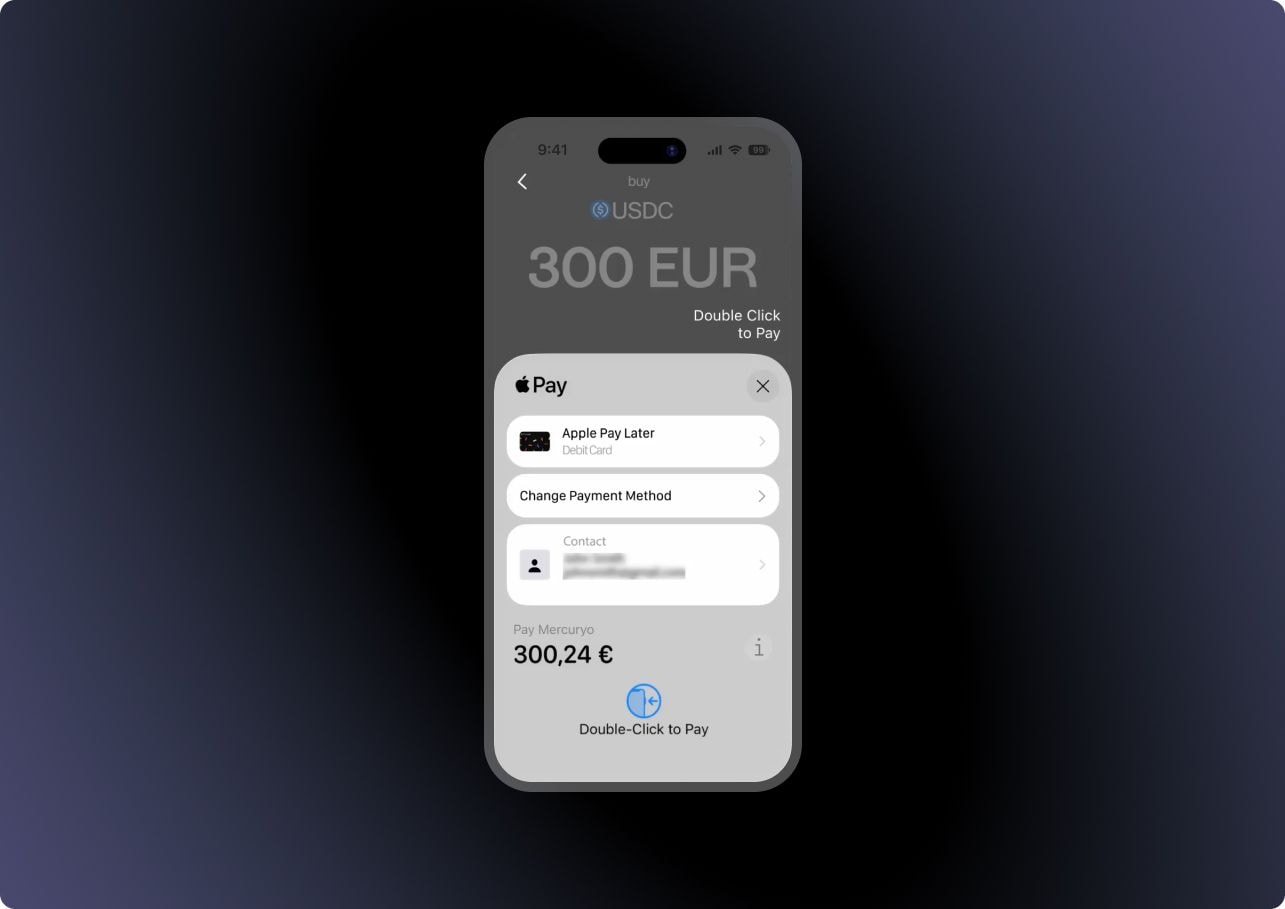
When a crypto app integrates Mercuryo as a payment provider, their users can now complete their entire purchase without ever leaving the app. They select Mercuryo, tap Apple Pay, and their crypto is on the way, all in the same environment where they made the decision to buy.
No redirects, context switching, or wondering if they’re still in a safe place or if this checkout page is legitimate. The entire experience stays exactly where the user expects it to be.
This matters because trust in crypto onboarding is largely about familiarity. When you’re redirected out of an app to complete a payment, your brain registers it as a break in the experience. Even if everything is perfectly secure, that redirect creates friction and doubt.
Apple Pay solves this because it’s already a trusted behavior. You use it for coffee, for transit, for shopping. It’s muscle memory. When that same familiar interaction works for crypto, buying digital assets stops feeling like a separate category of transaction and starts feeling like everything else you do on your phone.
How It Works
The experience is deliberately simple:
- Select Mercuryo as a payment provider in your app
- Choose Apple Pay as a payment method
- Tap "Buy"
- And done! Your crypto is on the way to your wallet
That’s it. The entire flow takes seconds, and at no point are you asked to leave the app you’re already in.
For partners integrating Mercuryo, this creates a seamless experience that matches what users expect from modern financial services. The same UX standards that apply to banking apps, payment apps, and e-commerce platforms now apply to crypto as well.
Why This Matters Now
For years, the crypto industry has talked about mainstream adoption. But mainstream adoption doesn’t happen by convincing people that crypto is special. It happens by making crypto feel normal.
Normal means using payment methods people already trust. Normal means staying in the app you opened. Normal means transactions that feel exactly like the dozens of other digital payments you make every week.
Redirect-based payment flows haven’t delivered this. They’ve operated as separate services that wallets and platforms plug into, which inevitably creates seams in the experience. Users notice those seams. They notice when they’re redirected. They notice when the design language changes, and the flow suddenly feels unfamiliar.
Mercuryo’s Apple Pay integration eliminates those seams. It brings Web2-level UX expectations to Web3 payments, so that the experience looks, feels, and behaves like every other modern financial interaction.
This is especially important for first-time crypto buyers. When someone is already uncertain about entering a new financial ecosystem, the last thing they need is a checkout process that adds to that uncertainty. A familiar, trusted payment flow removes one major source of friction right at the moment when it matters most.
What Changes for Platforms
For crypto wallets and platforms that use Mercuryo, Apple Pay integration represents a significant shift in what they can offer their users.
Conversion rates matter, obviously. Reducing drop-off during onboarding means more users actually complete their first purchase and stick around. But beyond the metrics, there’s a question of product quality. Platforms can now offer a purchase experience that genuinely matches the rest of their product.
This also changes competitive positioning. In a market where dozens of wallets and platforms are fighting for new users, UX becomes a differentiator.
What Hasn’t Changed
It’s worth being clear about what the Apple Pay integration doesn’t do.
It doesn’t eliminate compliance requirements. KYC, identity verification, and regulatory obligations still exist. What changes is where and how that friction appears in the user journey, and how familiar the payment flow feels when users get there.
It also doesn’t work everywhere. Due to regulatory constraints, buying with Apple Pay through Mercuryo isn’t available in the United States and the UK.
Looking Forward
The path to mainstream crypto adoption lies in making crypto behave like the financial tools people already use every day.
This integration is part of that shift. It’s infrastructure that lets crypto platforms meet users where they are, using payment methods they trust, in apps they’re already comfortable with, through flows that feel completely natural.
For platforms that use Mercuryo, Apple Pay is now live. For users, it means buying crypto just got as simple as paying for an Uber ride.
Don’t invest unless you’re prepared to lose all the money you invest. This is a high-risk investment, and you should not expect to be protected if something goes wrong.