Between Jurisdictions: Top 5 Countries to Launch Your Crypto Startup
As cryptocurrency adoption continues to rise, new jurisdictions keep popping up, with presidents themselves announcing their support for digital currencies. It all sounds exciting until you realize that political hype doesn’t always translate into long-term stability.
If you’re launching a crypto startup, picking the right location isn’t about chasing headlines. A country making noise about Bitcoin today might change its stance tomorrow. What matters is a jurisdiction that truly understands Web3, protects businesses from regulatory whiplash, and allows you to focus on building rather than battling compliance nightmares.
The allure of emerging crypto-friendly countries might be tempting, but it’s smarter to stick with those that have already proven themselves.
You need to think long-term: consider licensing requirements, operating costs, tax implications, and how regulators respond when markets tighten, or new standards emerge.
In this article, we’ll break down what makes a country genuinely crypto-friendly, explore the top jurisdictions leading the crypto space, and help you decide which one best fits your startup’s goals.
Key takeaways
- Don’t pick a jurisdiction based on hype. Prioritise regulatory clarity, banking access, and long-term stability so you can build without constant compliance surprises.
- The strongest crypto-friendly jurisdictions combine clear licensing, workable operating conditions, and ecosystems that help you hire, raise, and partner faster.
- Your licence type depends on what you do. Exchanges, custody and trading platforms face higher capital, deeper scrutiny, and more ongoing reporting than lighter infrastructure models.
- EU founders should plan for MiCA-era requirements. EU jurisdictions can offer scale advantages, but the bar is rising on governance, safeguarding, and fit-and-proper checks.
- Jurisdiction is only step one. To operate globally you still need compliant fiat rails and reliable on and off ramps, which is where infrastructure partners like Mercuryo reduce friction as you scale.
What makes a country crypto-friendly?
Choosing the right jurisdiction for your crypto startup involves finding a place that allows digital assets while also supporting sustainable growth. A «crypto-friendly» country offers startups:
- A stable legal environment
- Practical operating conditions
- The infrastructure needed to scale
These factors determine whether you can build confidently or spend most of your time navigating uncertainty.
Here are the core elements that define a crypto-friendly jurisdiction:
- Regulatory clarity: Clear, well-documented rules reduce ambiguity and help founders understand requirements, operational expectations, and long-term compliance obligations. Jurisdictions with transparent frameworks tend to offer more predictable environments for innovation.
- Favourable tax policies: Competitive tax regimes, such as reduced corporate tax rates, capital gains exemptions, or incentives for tech companies, can significantly influence operating costs. Startups benefit when tax policies are aligned with digital asset activity rather than penalizing it.
- Banking and fiat on/off-ramp accessibility: Reliable access to crypto-friendly banks and payment partners is essential. Without dependable fiat rails, day-to-day operations become difficult, from paying suppliers to enabling customer transactions. Smooth on/off-ramps also improve user experience and conversion rates.
- Supportive ecosystem and infrastructure: Countries with active blockchain networks and developer communities help startups access talent, specialized legal and compliance firms, accelerators, and venture capital. A strong ecosystem helps companies build faster and reduces the risk of running into operational roadblocks.
- Operational stability and international alignment: Countries with consistent policy direction and alignment with global standards minimize the threat of sudden rule changes. This stability supports long-term planning and makes it easier to scale across borders.
A jurisdiction that excels across these factors doesn’t just help you start a crypto business, but also enables you to thrive.
5 Best countries for crypto startups
Some jurisdictions stand out not because they make headlines, but because they consistently offer clarity, stability, and a strong foundation for long-term growth. These five countries are the top contenders for crypto founders evaluating where to launch:
Singapore
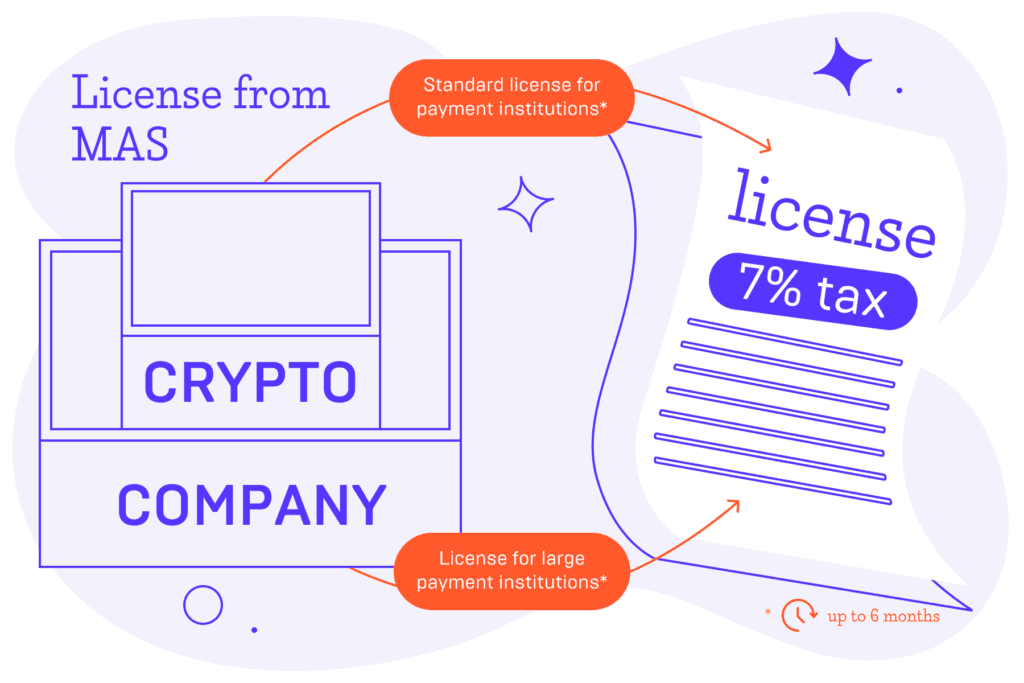
Singapore is one of the most respected crypto hubs globally, thanks to its clear regulatory framework, strong talent pool, and ecosystem of accelerators, legal specialists, and venture capital firms. Its predictable approach to digital asset regulation and competitive tax regime make it a leading choice for Web3 businesses.
Licensing and requirements
Crypto businesses are regulated by the Monetary Authority of Singapore (MAS). The core framework is the Payment Services Act (PSA), which introduced digital payment token (DPT) services and requires providers to be licensed as payment institutions.
In practice, most crypto service providers apply under one of two routes:
- Standard Payment Institution (SPI): suitable for smaller-scale operations with transaction limits
- Major Payment Institution (MPI): designed for higher-volume services, with heavier requirements
MAS expects real operational substance from licensed firms, including a Singapore entity, a physical office, and local leadership and compliance capability (e.g., director and AML officer).
The licensing process is documentation-heavy, with detailed scrutiny of your business model, AML/CFT controls, risk management, cybersecurity, and safeguarding measures.
Costs
Application fees:
For 2026, application fees range from S$500 — S$1,500 depending on licence type. Here’s a breakdown:
Fees | Application fee | Annual renewal fee |
|---|---|---|
Money-Changing License | S$500 | S$1,500 |
Standard Payment Institution License | S$1,000 | S$5,000 |
Major Payment Institution License | S$1,500 | S$10,000 |
Corporate taxes: 17% flat rate, with incentives for tech and innovation sectors
What to watch out for
Regulation is clear but strict. Expect extensive due diligence, strong AML/KYC controls, and ongoing reporting obligations. MAS frequently updates guidance, so staying compliant requires continuous monitoring.
Switzerland
Switzerland is known for regulatory stability and strong financial governance. Its Crypto Valley ecosystem in Zug offers legal expertise, accelerators, and early-stage funding which makes it a mature environment for crypto and blockchain startups.
Licensing and requirements
Crypto firms typically require a Fintech License or authorization from the Swiss Financial Market Supervisory Authority (FINMA), depending on their activity. Requirements include AML compliance, operational risk management, and capital adequacy.
Costs
- Application fees: The cost of applying for a Swiss FinTech licence is largely time-based. FINMA charges a processing fee based on its review time, usually CHF 15,000-30,000.
- Corporate taxes: Vary by canton; effective rates often around 12–21%
What to watch out for
Licensing can be lengthy (up to 18 months), and requirements are detailed. Swiss firms expanding into the EU may also need to meet MiCA standards. You need to ensure compliance with anti-money laundering (AML) regulations and maintain adequate capital reserves.
Once licensed, firms also pay ongoing supervisory levies under a "user-pays" model. This includes a fixed CHF 3,000 basic levy, plus an additional levy weighted 20% to balance sheet total and 80% to gross income.
Germany
Germany stands out in Europe as one of the most regulated countries for crypto businesses. Known for its strong legal framework and precise regulations, the country provides a stable environment for crypto entrepreneurs.
While it is one of the stricter jurisdictions in terms of licensing and compliance, its clear tax laws and transparent regulations make it an ideal place for businesses that need a well-defined and secure legal environment to operate in.
Germany operates under the EU-wide MiCA regime, meaning crypto-asset service providers need CASP authorisation rather than relying on the older KWG framework.
Licensing and Requirements
Crypto businesses in Germany must obtain a licence from the Federal Financial Supervisory Authority (BaFin) for CASP authorisation. The regulator’s review typically takes around 3–6 months once a complete application is filed.
Expect a heavy focus on AML and counter-terrorist financing requirements, IT security and controls, client asset safeguarding/segregation, and fit-and-proper checks for directors and key persons (including an AML officer and deputy).
A German legal entity and local presence are also expected, alongside minimum regulatory capital (around €125k—€350k depending on services) and a detailed 3-year business plan.
Costs
- Application fees: BaFin’s government fee for reviewing the application is €10,750 (professional/legal/compliance support is typically additional).
- Corporate taxes: 15% corporate tax, plus local trade tax (varies by municipality)
What to watch out for
Germany is strict and documentation-heavy. Quality matters: incomplete or inconsistent submissions can trigger follow-up requests and delays, and licensed firms move into ongoing reporting, compliance updates, and inspection readiness after approval.
Also note that from 2026, all providers still operating under the KWG framework must have CASP authorization.
United Arab Emirates
The UAE — particularly Dubai — has become a fast-growing crypto hub with business-friendly regulations, strong government support, and a growing Web3 community.
While the UAE is a popular crypto hub, it’s not a single-rulebook jurisdiction. Licensing, requirements, and timelines depend on the business zone where you set up (eg, Dubai mainland vs a free zone vs a financial centre like the Dubai International Financial Centre (DIFC) and what crypto activities you want to offer.
Licensing and requirements
You can open a cryptocurrency license in the UAE in the following zones:
- DMCC: Dubai Multi Commodities Centre
- IFZA: International Free Zone Authority
- ADGM: Abu Dhabi Global Market
- DWTC: Dubai World Trade Centre
- DAFZA: Dubai Airport Free Zone Authority
Crypto businesses must obtain a Crypto Asset License from the relevant authority, such as the Dubai Financial Services Authority (DFSA) or Virtual Assets Regulatory Authority (VARA). The process is efficient, often taking 4-6 months, provided all requirements are met.
Costs
- Application fee: $25 000
- Corporate taxes: 0% in most free zones for qualified activities
What to watch out for
The UAE isn’t a single-rulebook jurisdiction, so licensing requirements can change depending on the emirate and free zone you choose. The «fast» timelines only hold if your documentation is tight and your activity scope matches the licence category.
Banking can also be a gating factor, and ongoing obligations (reporting, audits, compliance reviews, and sizable $50 000 annual supervision fee can make the UAE more expensive to operate in than the headline tax benefits suggest.
Other considerations include demonstrating sufficient financial resources to cover six to twelve months of operating expenses, and meeting high standards for security and customer data protection.
Portugal
Portugal is becoming a top choice for crypto founders thanks to its favourable tax regime, light-touch regulation, and long-term capital gains exemptions.
With a growing crypto community and progressive outlook, it offers a supportive base for businesses looking to reduce their tax burden while staying aligned with global standards.
Licensing and requirements
Portugal has historically regulated crypto providers through VASP registration with Banco de Portugal, with a heavy focus on anti-money laundering and counter-terrorist financing compliance.
As MiCA rolls out across the EU in early-to-mid 2026, Portugal will shift toward a Crypto-Asset Service Provider (CASP) licence, which should largely build on the existing VASP framework (so VASPs are not starting from zero), but will introduce additional requirements and more formalised supervisory expectations.
In practice, plan for:
- Local substance (not just a mailbox) and credible operational presence
- A defined compliance function (policies, monitoring, reporting and governance)
- More documentation at application stage as MiCA-aligned requirements tighten
Costs
Under the expected CASP framework, capital requirements increase depending on the services you offer, and you should also budget for a €475 state application fee.
Indicative capital «classes» include:
- Class 1 (50,000 EUR): crypto processing/transmitting services, advice in crypto-assets, portfolio management
- Class 2 (125,000 EUR): exchange services (fiat or other crypto), custody services
- Class 3 (150,000 EUR): crypto trading platform
When it comes to corporate tax, Portugal applies standard corporate income tax of 21% on the mainland and 20% on the island of Madeira. Also, crypto-related corporate profits may be taxed up to 28%, depending on how the activity and income are classified.
What to watch out for
- MiCA will raise the bar. Even if the transition is designed to be smooth for existing VASPs, expect stricter documentation, governance, and ongoing obligations.
- Your activity scope drives complexity. The jump in required capital between service classes makes licensing strategy (what you do now vs later) a real lever.
- Banking can still be the bottleneck. Even with the right regulatory posture, account opening and payments access can add friction and time to your go-live plan.
Summary: 5 Best countries for crypto startups
This overview helps founders compare top jurisdictions and decide what is the best country to get a crypto license for a startup based on regulation, tax policy, and ecosystem strength.
Country | Licensing Authority | Regulatory Framework | Tax Advantages | Crypto Ecosystem and Support |
|---|---|---|---|---|
Singapore | MAS | PSA and FSMA DTSP | No capital gains tax; competitive corporate tax incentives | Strong tech talent, accelerators, venture capital access, and established legal expertise |
Switzerland | FINMA | FinTech License Framework; DLT Act | Canton-level tax benefits; low effective corporate tax rates | Mature Crypto Valley ecosystem, incubators, and a global financial hub |
Germany | BaFin | BaFin licensing + MiCA CASP (EU 2023/1114) | Clear tax rules; long-term crypto gains are tax-free for individuals | Access to EU market, strong compliance infrastructure, and an established fintech scene |
UAE | DFSA / VARA (zone-dependent), SCA (federal) and ADGM FSRA | Federal SCA/CBUAE virtual asset regime; VARA (Dubai), DFSA (DIFC) and FSRA (ADGM) digital asset frameworks. | 0% corporate tax for qualifying free-zone activities | Rapidly growing Web3 hub, government-backed initiatives, accelerators |
Portugal | Banco de Portugal (VASP registration); CMVM for securities‑type crypto under MiCA | MiCA authorisation for CASPs; light-touch national rules | Long-term crypto gains exempt; moderate corporate tax | Growing crypto and Web3 community, relatively founder‑friendly environment, and active work on the national blockchain infrastructure |
How to choose the right jurisdiction for your crypto startup
One of the most important steps in how to start a crypto business is selecting a jurisdiction that aligns with your business model, funding plans, and long-term goals.
Use the checklist below to evaluate each option with clarity and confidence.
1. Will the licensing process match your startup’s launch timeline?
Some countries have fast-track approvals, while others involve lengthy reviews and detailed documentation. Delays can slow product launches and impact investor expectations.
2. Does the jurisdiction’s reputation support your fundraising goals?
Consider whether the jurisdiction’s reputation supports your fundraising goals, especially if you’re building an investment platform targeting institutional partners. Well-regarded regulatory environments can boost credibility with VCs, institutional partners, and enterprise clients.
3. Can you operate sustainably within the country’s tax and compliance framework?
Beyond headline tax benefits, look at ongoing reporting, AML obligations, and operational costs to ensure your business remains scalable.mains scalable.
4. Is there reliable access to crypto-friendly banking and payment partners?
Smooth fiat on/off ramps are essential for user experience, settlements, and day-to-day operations.
5. Will the jurisdiction support long-term scaling or global expansion?
Consider whether local rules align with international standards such as MiCA, and whether the market offers the ecosystem support needed for future results.
6. Does the local ecosystem offer the talent and services you need?
Access to compliance specialists, engineers, legal expertise, and accelerators can significantly reduce friction as you grow.
Evaluating these factors together helps founders choose a jurisdiction that supports both operational stability and long-term strategic growth.
The bottom line
Choosing the right jurisdiction is only one part of building a successful crypto startup. You also need reliable, compliant infrastructure to operate globally. Mercuryo helps founders bridge fiat and crypto seamlessly, offering secure on/off ramps, compliant payment flows, and settlement tools that work across borders.
With regulatory requirements tightening worldwide, having a foundational infrastructure partner that prioritizes trust, compliance, and user experience is essential.
To support your global expansion, explore how Mercuryo simplifies cross-border payments and enables crypto businesses to scale with confidence.
FAQs
- What is a crypto startup?
A crypto startup is a company building products or services around cryptoassets and blockchain rails, such as wallets, exchanges, custody, tokenised assets, stablecoin payments, or infrastructure for Web3 apps. Because these activities can fall under financial regulation, many crypto startups must design for licensing, AML and CFT controls, safeguarding, and ongoing compliance from the start. - How to start a crypto startup?
Start by choosing a clear use case and product scope, then map which activities are regulated in your target markets. Pick a launch jurisdiction with a workable licensing path, set up the entity, and build your AML and CFT programme early. Secure banking and fiat rails, ship an MVP, then expand through licences and partnerships. - What country has the best crypto laws?
There is no single best set of crypto laws for every startup. The right choice depends on your services, customers, and appetite for compliance. The EU’s MiCA creates an EU wide framework for cryptoassets and service providers. Singapore regulates payment token services under the Payment Services Act. Switzerland offers established token classification guidance from FINMA. - What is the most friendly country for crypto?
Crypto friendly usually means clear rules, a predictable licensing route, and access to banking, not lax oversight. Singapore is often chosen for credibility and a defined licensing framework under MAS. Dubai has a dedicated regulator, VARA, for virtual asset activities. Switzerland is known for supervisory clarity on token types. EU hubs benefit from MiCA legislation.